
 English


























































































































































































































































































































































































































































































































































































When a woman outwitted death: The story behind Savitri Vrat



Every year, married women across Odisha, Bihar, and Nepal observe a fast that commemorates one of the most remarkable victories in Hindu mythology. Not a battle won with weapons, not a demon vanquished with divine powers, but a quiet triumph of intelligence over inevitability, of devotion sharpened into strategy, of a woman who looked Death in the face and won her husband back through sheer wit.
This is Savitri Vrat, and the woman at its heart is Savitri, whose story deserves to be told not as a tale of feminine sacrifice alone, but as a masterclass in negotiation, presence of mind, and the kind of love that refuses to accept defeat.
The Birth of Savitri
The story begins with King Ashvapati of Madra, a righteous ruler whose palace echoed with emptiness despite all its grandeur. He had no children, no heir, no one to carry forward his lineage. For years, he performed rigorous tapasya, worshipping Goddess Savitri with the singular hope of being granted a son.
The goddess appeared, moved by his devotion. But instead of the son he prayed for, she blessed him with a daughter so radiant, so filled with divine light, that she seemed to carry the goddess’s own essence. The king named her Savitri, after the deity who had granted her.
Savitri grew up brilliant and strong-willed, educated in scriptures and statecraft, trained in philosophy and decision-making. When the time came for marriage, her father gave her something unusual for a princess of that era. He gave her the choice to choose someone worthy of you.”
Finding Satyavan
Savitri traveled through forests and kingdoms, observing princes and warriors, scholars and ascetics. None moved her heart until she reached a forest hermitage and met Satyavan, the son of King Dyumatsena.
Dyumatsena had once ruled a prosperous kingdom, but blindness and betrayal had driven him into exile. He lived in the forest with his wife and son, surviving on roots and fruits, his royal glory reduced to memory. Satyavan, despite being raised in poverty and exile, carried himself with quiet dignity. He was kind, learned, devoted to his parents, and when Savitri saw him, she knew.
She returned to her father and announced her decision. “I will marry Satyavan.”
But before King Ashvapati could celebrate, Sage Narada appeared with a prophecy that froze the celebration in its tracks. “Satyavan is indeed noble, kind, and worthy,” the sage said. “But he is marked by fate. Exactly one year from today, he will die.”
The king was horrified. He begged Savitri to reconsider, to choose someone else, someone whose life was not measured in months. But Savitri, with the same conviction that had led her to choose Satyavan, refused. “A woman chooses her husband only once,” she said. “I have chosen mine.”
The marriage took place. Savitri left the palace and moved to the forest hermitage, trading silk for bark cloth, luxury for simplicity, certainty for a love that had an expiration date.
The Unfortunate Day
Savitri did not spend that year in denial or despair. She served her blind father-in-law and mother-in-law with devotion. She lived as Satyavan’s wife with full presence, not holding back affection because their time was limited. But she also prepared. She observed strict fasts, performed rituals, and prayed with an intensity that suggested she was not simply accepting fate but planning to challenge it.
When the final day arrived, Savitri knew. She had kept precise count, and when Satyavan prepared to go into the forest to gather wood, she insisted on accompanying him. He tried to dissuade her, noticing how weak she looked from fasting, but she would not be left behind. Where her husband went, she would follow.
In the forest, as Satyavan climbed a tree to cut branches, he suddenly felt faint. He climbed down, laid his head in Savitri’s lap, and closed his eyes. And then Savitri saw him. Yama, the god of death himself, appearing not as a distant mythological figure but as an immediate presence, there to claim what was owed.
The Wordplay
Yama pulled Satyavan’s soul from his body and bound it. Then he turned south, toward his realm, expecting Savitri to mourn and eventually return to the living.
But Savitri stood up and followed.
Yama stopped and turned. “Savitri, go back. This path is only for the dead.”
“Lord,” she replied, “wherever my husband is, that is where my dharma lies. I will not go back.”
Yama was struck by her devotion. “Your dedication pleases me,” he said. “Ask for a boon, anything except Satyavan’s life.”
Savitri did not hesitate. “Restore my father-in-law’s eyesight.”
“Granted,” Yama said. “Now return.”
But Savitri kept walking.
Yama stopped again, puzzled and somewhat impressed. “Why do you still follow?”
Savitri spoke with the calm of someone reciting truth. “Lord, the company of the virtuous is never fruitless. Those who walk even seven steps together become friends. You are Dharmaraja, the lord of righteousness, one who follows rules perfectly. That is why you are called Yama. Being in your presence is itself a blessing.”
Yama, who was used to fear and pleading, had never heard anyone speak to him this way.
Philosophy as conversation. Flattery as truth. “You speak words I have never heard before,” he said. “Ask for another boon. But not Satyavan’s life.”
“Restore my father-in-law’s lost kingdom.”
“Granted. Now rest, Savitri.”
But still, she walked.
The Trap
By now, Yama was deeply intrigued. This woman was not begging or bargaining. She was simply being present, speaking truth, and somehow making him want to grant her wishes.
She continued speaking. “My father has no son. You have taken my father-in-law’s only son. If I spend my old age serving my in-laws, who will care for my father?”
“Ask for a boon, Savitri, and then return.”
“Grant my father sons.”
“Granted. Now please, go back.”
But Savitri’s steps did not slow. She spoke again, this time about the nature of the virtuous, how they help others without expecting anything in return, how they show kindness even to enemies. “How much more, then, should you show grace to one who is your friend?”
Yama felt something he rarely experienced. Genuine respect. “Savitri, no one has ever spoken such words. Ask for one more boon. But not Satyavan’s life.”
And here, Savitri laid her trap with the precision of a master strategist.
“Grant me a hundred sons through my father-in-law’s lineage, sons who will carry forward his kingdom.”
Yama, moved by her wisdom and worn down by her persistence, granted it without thinking. “So be it.”
Silence fell. And in that silence, Savitri spoke softly but firmly.
“Lord, you have granted me a hundred sons. But how can this boon be fulfilled if Satyavan is not alive? Without him, your words become false. And Yama never speaks falsehood.”
In that moment, Dharmaraja understood. He had been outmaneuvered. Not through deception, but through devotion combined with intelligence. The woman had built a logical trap using his own nature against him. He was bound by his word, and his word now contradicted itself unless Satyavan lived.
Yama smiled. Perhaps for the first time in dealing with a mortal, he smiled with genuine admiration. “Go, Savitri. Satyavan lives.”
What the Story Really Teaches
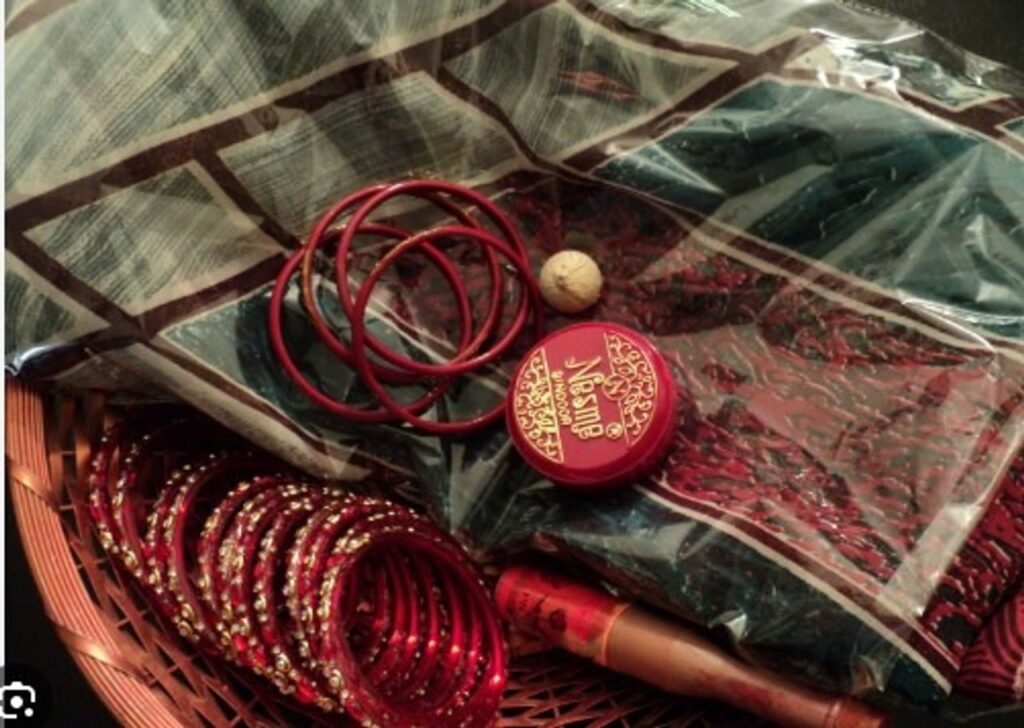
Savitri Vrat is observed by married women who fast and pray for their husbands’ long lives, mirroring Savitri’s devotion. In Odisha, the ritual takes a unique form with women creating intricate silapua, artistic rice flour designs, as offerings.
But the deeper lesson of Savitri’s story goes beyond wifely devotion. Yes, she loved her husband deeply. Yes, she was willing to follow him even into death. But what actually saved him was not sentiment. It was intelligence.
Savitri did not throw herself at Yama’s feet weeping. She did not curse fate or rage against injustice. She walked calmly, spoke philosophically, requested strategically, and when the moment came, she used logic as a weapon sharper than any sword.
She knew Yama’s nature. He was Dharmaraja, bound by righteousness, incapable of breaking his word. So she made him give his word in a way that created an impossible situation. Either he broke his promise about the hundred sons, or he returned Satyavan’s life. There was no third option.
This is why Savitri’s story matters. It shows that strength in women is not only in sacrifice or suffering. It is in clarity of thought, in strategic patience, in the ability to see three moves ahead while appearing to simply follow devotedly.
Savitri did not defeat death through supernatural power. She defeated it through wit. She did not beg for mercy. She created a situation where justice itself demanded her husband’s return.
Today’s Reality
When Savitri returned to the forest with Satyavan’s soul restored, she found his body still lying where she had left it, head in her lap. The soul returned to the body. Satyavan opened his eyes,
confused, feeling as though he had slept deeply. He had no memory of death, no awareness of the cosmic negotiation that had just taken place.
But Savitri knew. And when they returned to the hermitage, they found Dyumatsena’s sight miraculously restored. News soon arrived that his enemies had fallen and his kingdom was restored. Everything Yama had promised came true, including, in time, the hundred sons that would continue the lineage.
Every year when women across India observe Savitri Vrat, they are not just praying for their husbands’ long lives. They are invoking Savitri’s spirit, that combination of devotion and intelligence, of love and strategy, of knowing when to follow and when to lead.
The story reminds us that the greatest victories are not always won through force. Sometimes they are won through seven careful steps, through words chosen precisely, through understanding your opponent so well that you can make them defeat themselves.
Savitri walked behind Death not as a helpless widow but as a philosopher, a strategist, a woman who understood that the rules of the universe could be used, that dharma itself could be turned into a tool of rescue, that even Yama, the ultimate authority, could be convinced through perfect argument.
She asked for a hundred sons, knowing it would bring back the one husband who mattered.
And Death, impressed and outsmarted, had no choice but to agree.