
 English










































































































































































































































































































































































































































































































































































































































































































































































































































































































































































































































































































































































































































































































































































































































































































































































































































































































































































































































































































































































































































































































































































































































































































































































































































































































































































































































































































































































































































































Why is sun’s corona so hot? New Indian study offers fresh clues



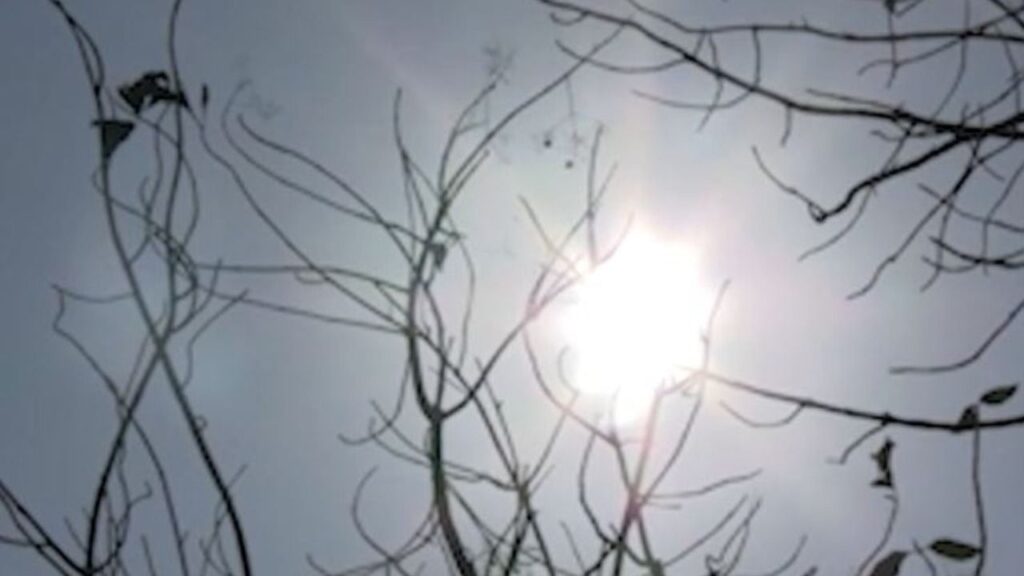
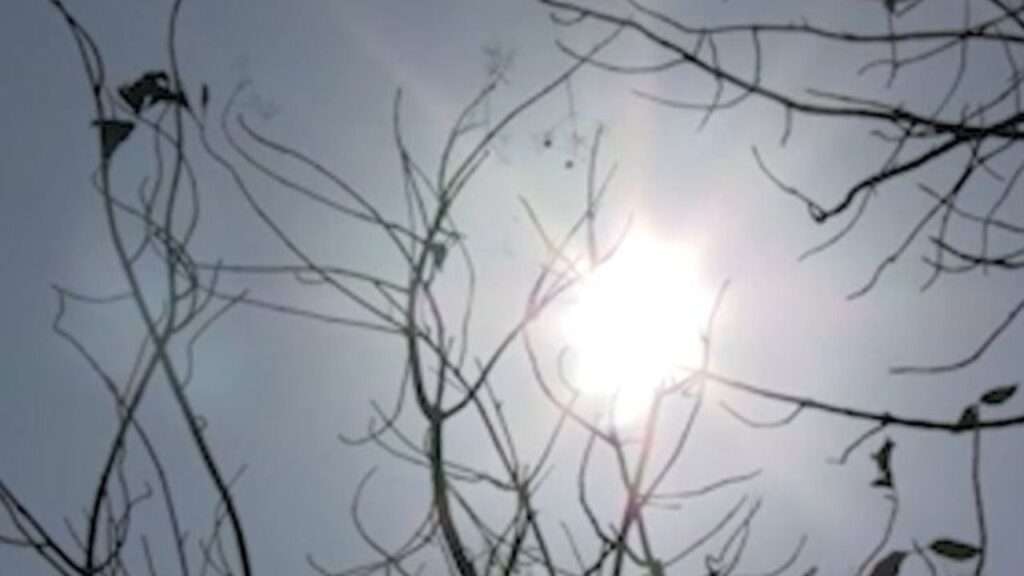
In a significant breakthrough in solar physics, Indian researchers have developed a novel method to detect hidden turbulence in the Sun’s outer atmosphere, or corona, potentially offering fresh clues to one of astronomy’s oldest mysteries — why the corona is dramatically hotter than the Sun’s visible surface.
The study, conducted jointly by the Aryabhatta Research Institute of Observational Sciences (ARIES) and Indian Institute of Technology Delhi, proposes a new mechanism for observing turbulence caused by magnetic waves travelling through the solar atmosphere. The findings could reshape scientists’ understanding of how energy moves through the Sun and heats its outer layers.
For decades, astronomers have struggled to explain why the Sun’s corona reaches temperatures of millions of degrees Celsius while the visible surface, known as the photosphere, remains comparatively cooler at around 5,500 degrees Celsius. Scientists have long suspected that magnetic waves and turbulence in the corona may play a role, but directly identifying these processes has remained a major challenge.
The latest research focused on propagating transverse magnetohydrodynamic (MHD) waves — magnetic waves that move through the Sun’s plasma-filled atmosphere and cause magnetic structures to sway sideways. These waves, often called Alfvénic or kink waves, are among the most common dynamic processes observed in the corona.
Researchers, including Ms. Ambika Saxena, a PhD scholar at ARIES, and Prof. Vaibhav Pant of IIT Delhi, used advanced three-dimensional simulations and forward modelling to examine how these waves behave inside an open magnetic field region of the corona. Their work simulated the behaviour of plasma with uneven density and tracked how waves propagated upward through magnetic structures.
The study found that as these waves travel, they generate turbulence through a process called phase mixing, creating increasingly fine-scale motion and density variations within the plasma. Because light emitted from different regions of the corona overlaps along the observer’s line of sight, these turbulent motions alter the shape of spectral signals, producing alternating red and blue asymmetries rather than perfectly symmetrical spectral lines.
According to the researchers, the simulations showed that these spectral asymmetries can reach nearly 20 per cent of a line’s peak intensity and create apparent secondary plasma motions of 30–40 km per second. Crucially, the alternating red-blue pattern was found to propagate outward at speeds consistent with the travelling magnetic waves, strengthening evidence that wave-driven turbulence may significantly contribute to coronal heating.
Published in ‘The Astrophysical Journal’, the findings suggest that propagating transverse MHD waves alone may be capable of generating measurable spectral asymmetries — a phenomenon that was previously not clearly established through observations.
Scientists believe the discovery could soon be verified using next-generation observational facilities such as the Daniel K. Inouye Solar Telescope (DKIST), which offers extremely high spatial and spectral resolution. If confirmed, the breakthrough may provide astronomers with a powerful new tool to study turbulence, energy transfer and the long-standing mystery of extreme temperatures in the Sun’s corona.